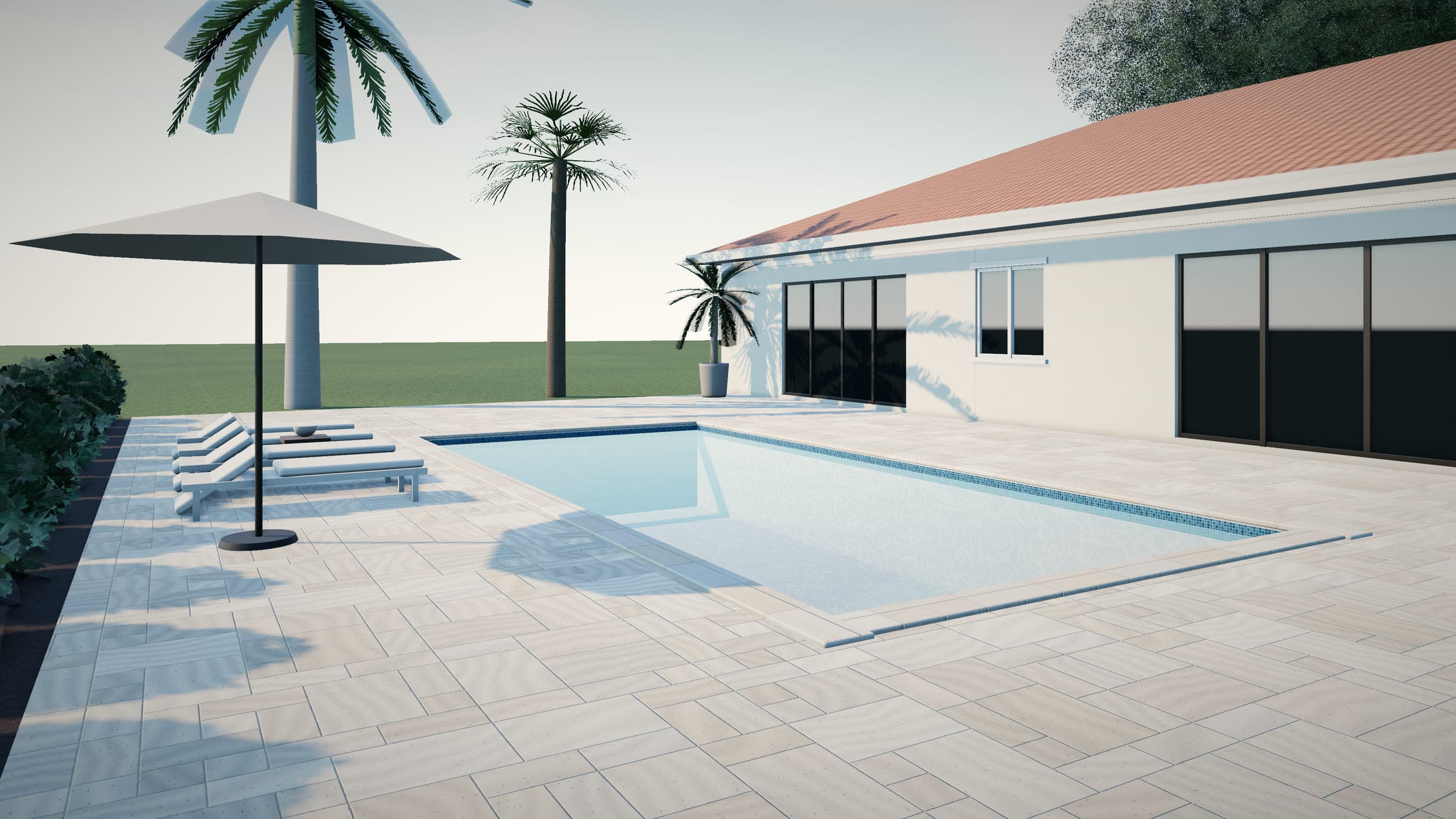
Deck work, not pool work
A pool-deck project replaces or upgrades the surface around the pool: the pavers, porcelain, or stone you walk on, the base beneath them, and the way water drains away. It does not include building, repairing, or resurfacing the pool itself, and it does not include pool equipment, plumbing, or electrical work. Those belong to pool professionals, and keeping the line clear makes proposals easier to compare.
- 1. Deck surface and base — the pavers, porcelain, or stone around the pool, plus the base and slope under them.
- 2. Coping — the cap at the pool edge sits on the pool’s structure, so any coping change is coordinated with a pool professional.
- 3. Pool vessel and interior finish — plaster, pebble, tile, and structural repairs are pool-contractor work, not deck work.
- 4. Pool equipment, plumbing, and electrical — not part of a deck project; access and lines under the deck are planned around.
- 5. Deck drainage — slope, drains, and outlets are part of the deck plan.
- 6. Pool safety barrier — fences, gates, alarms, or enclosures required by Florida law and local codes must stay compliant during and after the work.
Schematic plan. Every pool and yard is different.
Why homeowners upgrade pool decks
Many Central Florida pool decks are concrete with a spray texture or coating. Over time they crack, the coating peels or stains, and low spots hold water. A new paver or stone deck changes the look of the whole backyard and fixes the practical problems underneath — as long as the base and drainage are handled properly.
Choosing a pool-deck surface
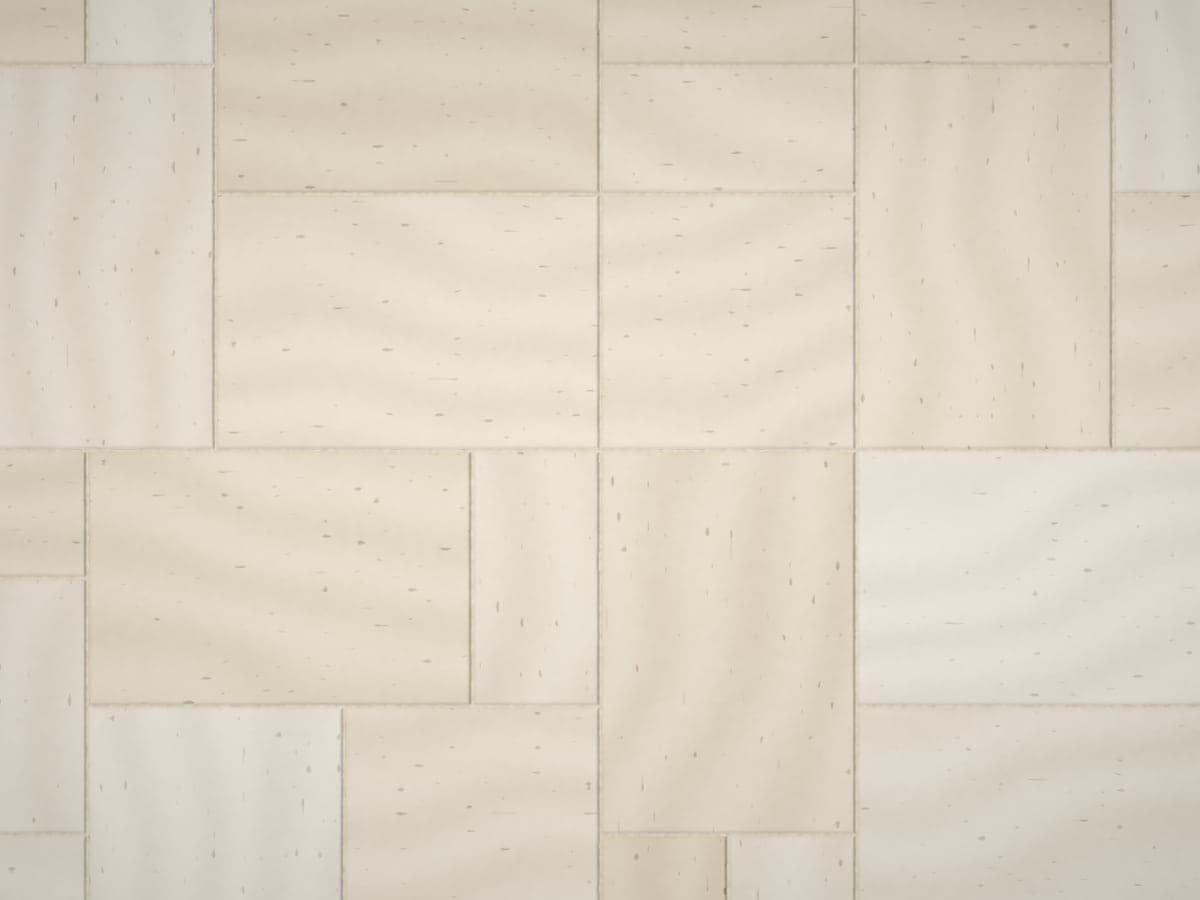
- Travertine is a longtime favorite around Florida pools for its natural, tumbled look and light colors. It varies from piece to piece, has natural pits, and is often sealed.
- Shellstone is a pale limestone with visible shell fragments. It has a soft, coastal look; it's also softer than many materials, so it can mark and stain more easily.
- Concrete pavers come in many colors and textures at a wide range of prices and can be matched to a patio or driveway.
- Porcelain pavers absorb very little water and resist staining. Choose finishes rated for wet, barefoot areas and follow the manufacturer's installation method.
Two questions matter more than looks: how hot does it get, and how slippery is it when wet? Lighter colors generally stay cooler, and textured finishes generally offer more traction — but both depend on the specific product, the finish, and any sealer. Ask for the manufacturer's slip-resistance information, and compare samples in full sun. The materials guide compares options in detail.
Overlay or remove the old deck?
An overlay — thin pavers set over the existing concrete deck — can save demolition and keep costs down. It works only when the old deck is sound, drains correctly, and there's enough room for the added height at doors, the coping, and any screen-enclosure base. If the deck is cracked, settled, or pitched toward the house, removing it is usually the better long-term choice. The existing-surfaces guide walks through the checks.
Drainage and safety around the pool
- Slope and drains. Pool decks should shed water away from the pool and the house toward drains or lawn. Existing deck drains are evaluated and replaced or extended where needed.
- Coping. The coping is coordinated with a pool professional if it's being replaced or re-leveled.
- Equipment access. Equipment, plumbing runs, and cleanouts stay accessible.
- Pool safety barriers. Florida's Residential Swimming Pool Safety Act (Chapter 515, Florida Statutes) and local codes set barrier requirements. Fences, gates, alarms, and enclosures that serve as a barrier must stay compliant during and after the work.
What the work involves
- Protecting the pool from debris and runoff.
- Removing the old surface — or preparing it for an overlay.
- Establishing slope and drains, then building the base.
- Setting borders and coping details, then the deck pavers.
- Filling joints, compacting where the system calls for it, and cleaning up.
- Reviewing care: many stone decks are sealed after installation.
What affects the cost
- Deck size and the number of curves, steps, and edges
- Removal of the old deck or coatings versus an overlay
- Material choice — natural stone and porcelain often cost more than standard concrete pavers
- Coping replacement and pool-professional coordination
- Drain replacement or extension
- Access for materials and equipment into the backyard
- Working around screen enclosures, barriers, and equipment pads
Planning ahead
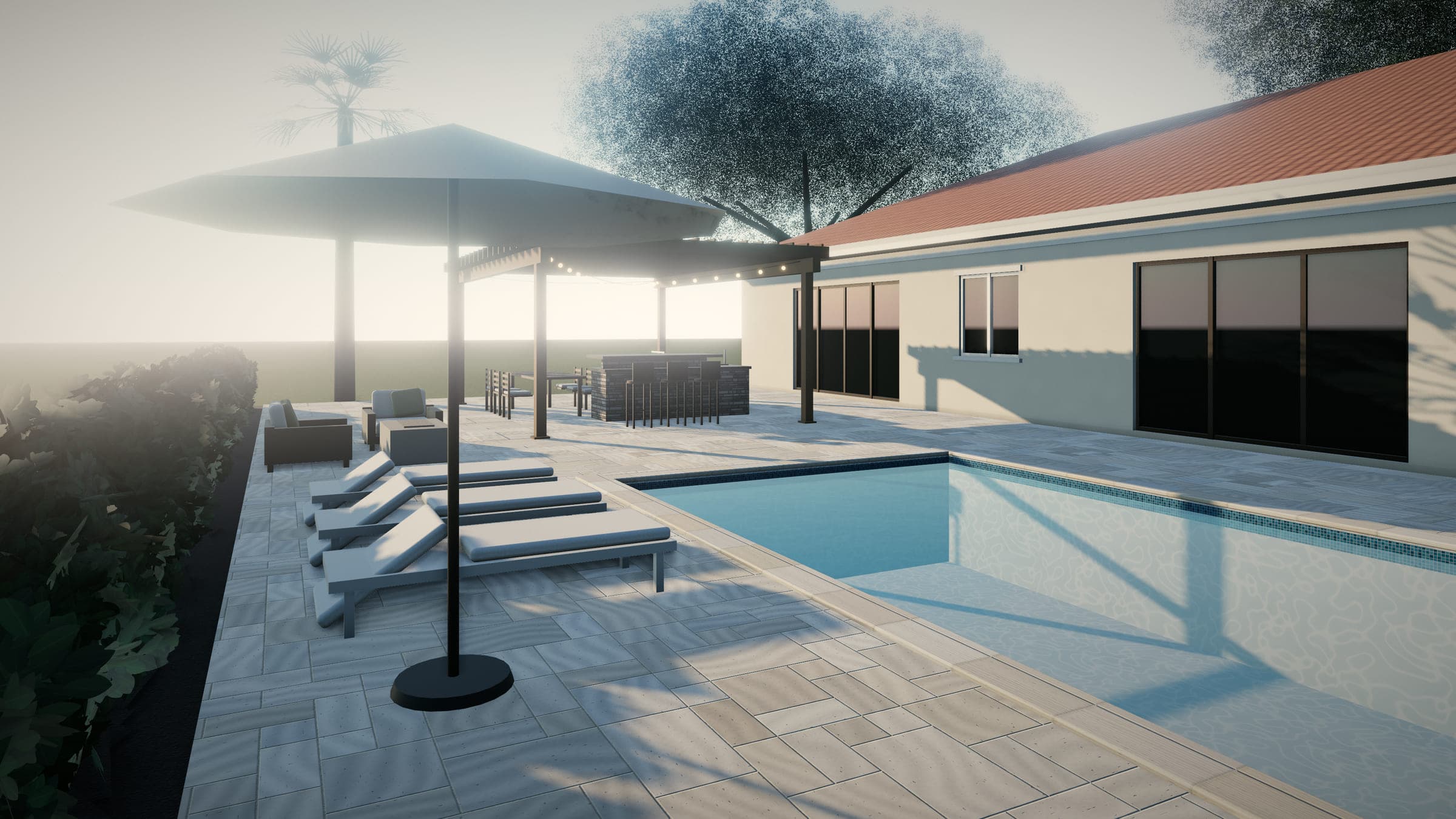
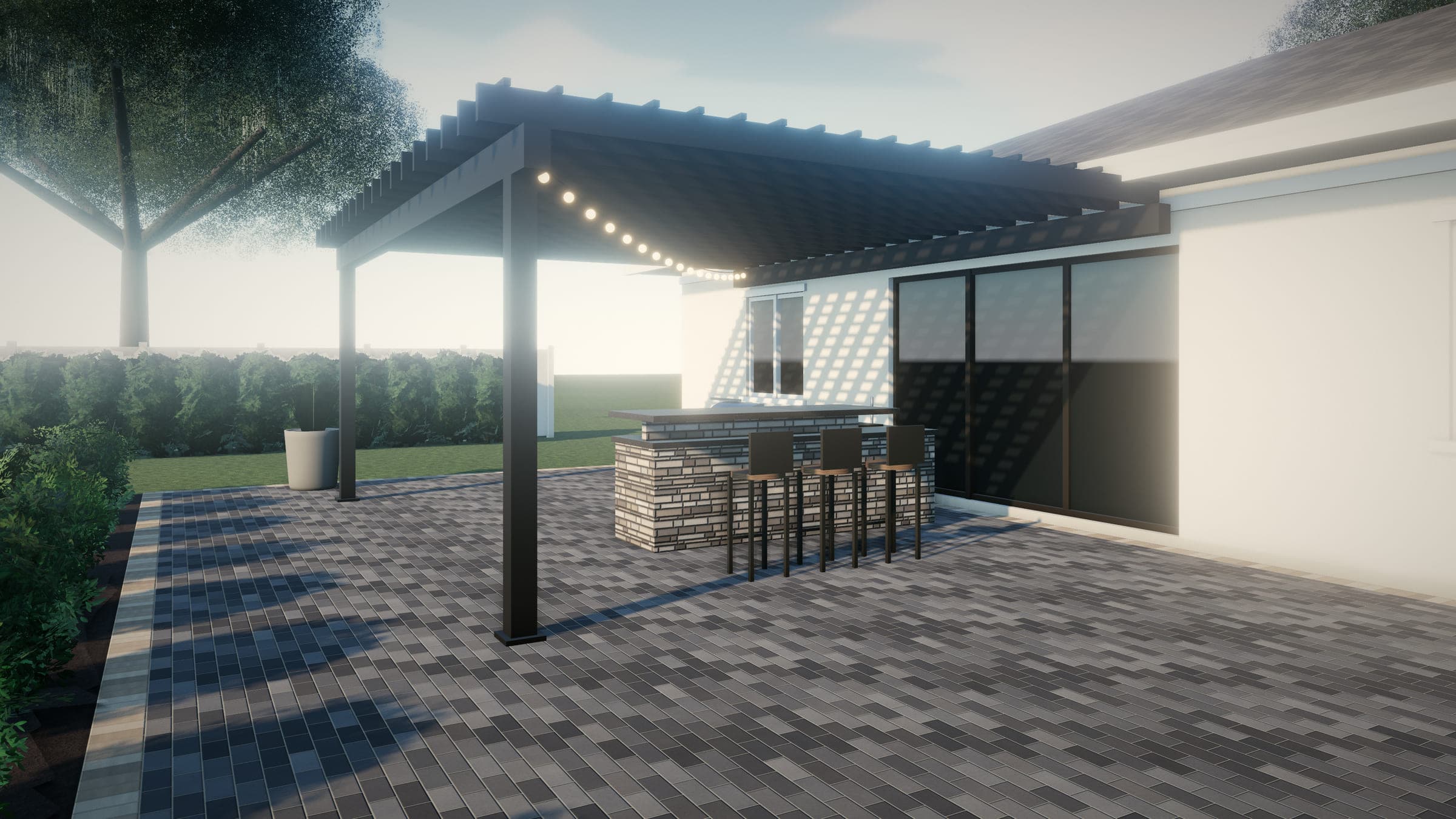
If you're also considering an outdoor kitchen, pergola, or fire feature near the pool, plan them now so utilities and footings go in before the deck. The pool-deck and entertaining concept shows how the pieces can come together.