Why homeowners replace driveways
Central Florida driveways take a beating: heavy summer rain, hot sun, irrigation overspray, tree roots, and years of oil drips and tire marks. Poured concrete tends to crack in long lines and is hard to patch invisibly. A paver driveway is built differently — thousands of units interlocking over a compacted base — so it flexes slightly instead of cracking, and damaged units or a settled area can be taken up and reset.
A driveway is also the largest paved surface most people see from the street. Coordinating it with the front walk, entry, and landscaping changes how the whole house reads.
What makes a driveway different from a patio
The materials may look similar, but a driveway is engineered for concentrated, repeated wheel loads — especially where cars turn.
- 1. Driveways carry concentrated vehicle loads, so the base is typically deeper and compacted in more lifts.
- 2. Thicker units and interlocking patterns (such as herringbone) are commonly chosen where cars drive and turn.
- 3. Patios still need a properly compacted base; it is just sized for foot traffic.
Schematic and not to scale. Depths are set by soil conditions and the manufacturer’s or designer’s guidance.
- A deeper base. The base is designed for the soil and the vehicles using it, placed and compacted in layers. This is the single biggest factor in how a driveway ages.
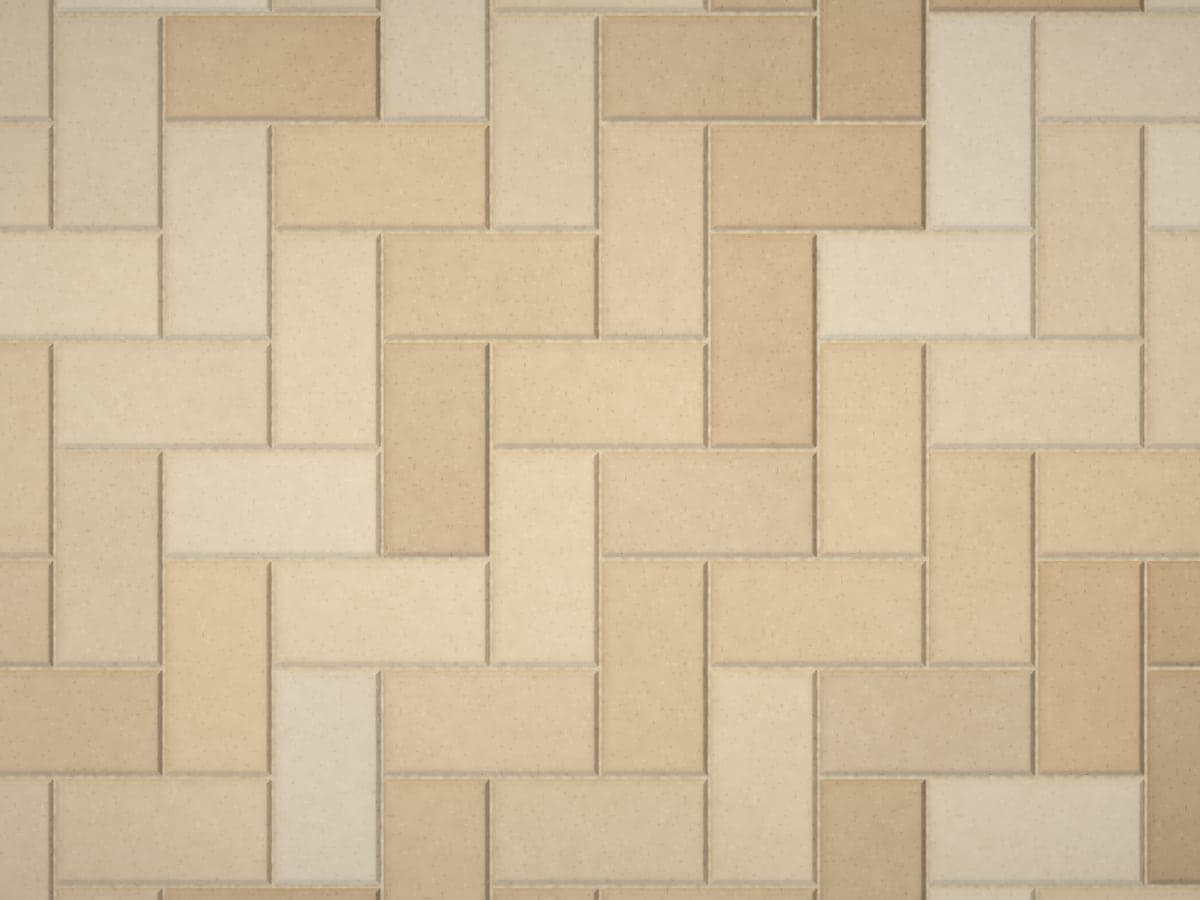
- Interlocking patterns. Herringbone, laid at 45 or 90 degrees to the direction of travel, is widely recommended for vehicular paving because it resists the shifting that turning tires cause. Running bond laid across the direction of travel can also work in some designs.
- Paver thickness. Residential driveways commonly use pavers around 2⅜ inches (60 mm) thick; thicker units are used for heavier loads or softer soils, following the manufacturer's guidance.
- A firm edge. Driveway edges carry wheel loads, so the edge restraint — often concrete beneath the border course — has to be solid.
Layout and curb appeal
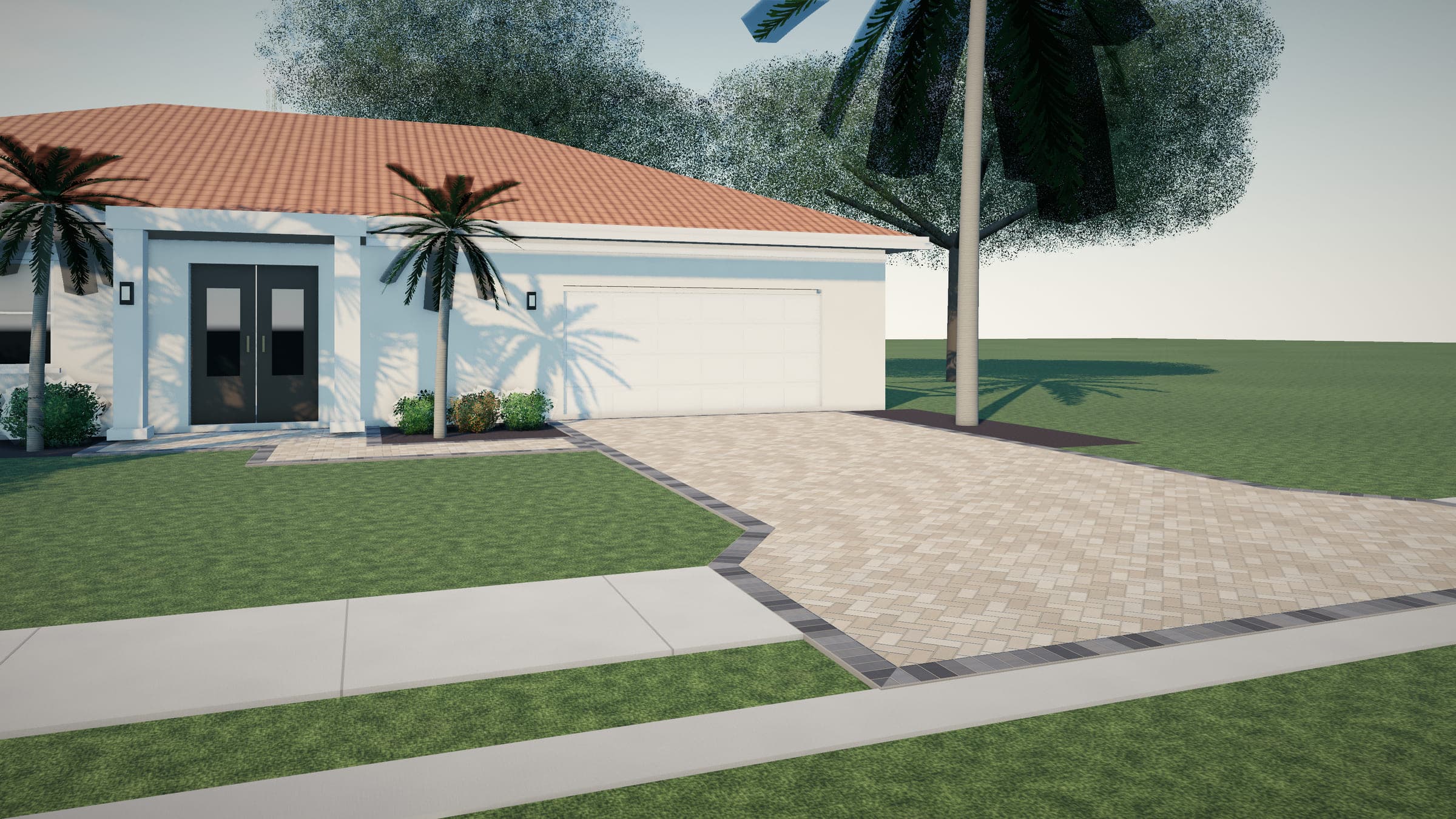
Think about how the driveway works every day: backing out, parking a second car, guests arriving, trash and recycling carts, and a clear walking route to the front door. Common upgrades include a flared apron, a wider parking pad, a border that frames the field, and a front walk built from the same pavers with its own landing at the entry. The driveway and front-walk concept shows how these pieces fit together.
Color matters more than people expect. Darker blends hide tire marks and oil better but get hotter; lighter tones stay cooler and brighter but show stains sooner. Many homeowners choose a mid-tone blend with a darker border.
The apron and the right-of-way
The section between your property line and the street — the apron, and often a public sidewalk crossing — usually sits in the public right-of-way. The city or county that governs your address sets the rules there, and many require a permit. Some jurisdictions allow pavers in the apron; others require concrete, especially through the sidewalk. We confirm current requirements for the address during planning, and the proposal states who handles the permit.
What the work involves
- Removal of the old driveway and haul-off of the concrete.
- Grading so water drains toward the street or another planned outlet — never back toward the garage.
- Base construction in compacted lifts suited to the soil and vehicles.
- Edge restraint and border placed before the field.
- Bedding, pavers, and cuts, then joint sand and compaction.
- Transitions at the garage slab, walkways, and the apron, with heights matched so there are no trip edges or water traps.
What affects the cost
- Size and shape, including flares, curves, and parking pads.
- Removal of existing concrete and any heavy root cutting (subject to tree rules).
- Base depth, driven by the soil and the vehicles using the driveway.
- Pattern and orientation — 45-degree herringbone and multi-color borders add cuts.
- Apron and permit requirements in the right-of-way.
- Drainage work such as trench drains at the garage or re-grading low spots.
- Access and staging on a street where equipment and deliveries have to be managed.
For a fuller breakdown, see what affects the cost of a patio, driveway, or backyard project.
Caring for a paver driveway
Sweep and rinse periodically, clean oil drips promptly with a cleaner made for pavers, and keep joints full. Sealing is optional; it can make stains easier to clean, but some sealers show tire marks. If an area ever settles, it can usually be lifted and reset — one of the main reasons homeowners choose pavers. See repair, restoration & sealing.